News
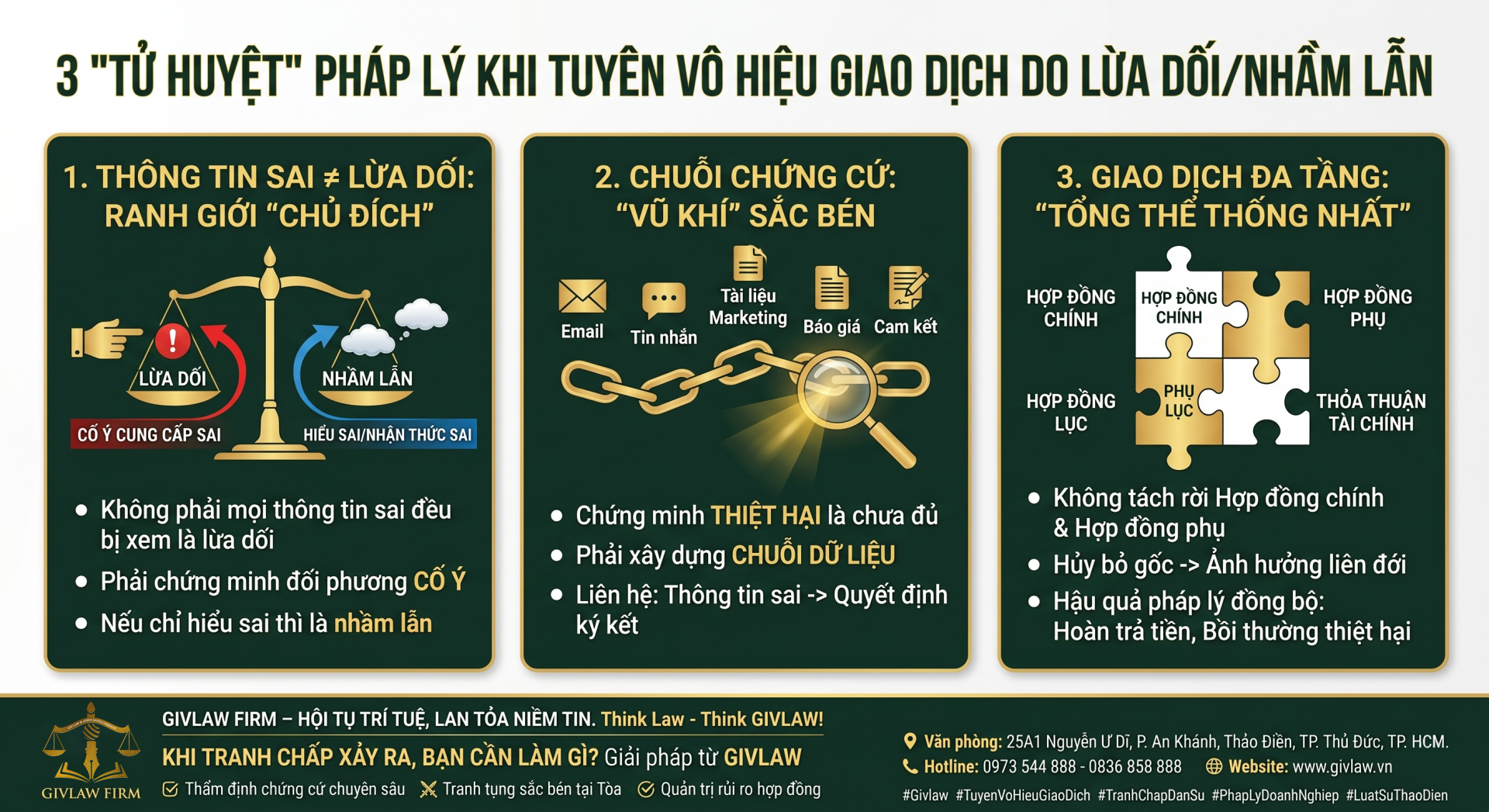
In civil and commercial transactions, the line between a "regrettable mistake" and "intentional deception" is extremely thin. Without mastering the key legal pillars, the injured party can easily find themselves in a passive position when requesting the Court to void a transaction.
Here are 3 strategic insights from the legal team at Givlaw Firm to maximize your protection:
Not all instances of inaccurate information lead to the cancellation of a contract based on deception.
The Core Point: To void a transaction due to deception, you must prove that the counterparty intentionally provided false information or concealed the truth to induce you into signing the contract.
Note: If the issue arises merely from your own incomplete perception or misunderstanding (without negative external influence), it is legally classified as a Mistake, leading to an entirely different legal recourse.
In legal disputes, evidence is everything. Merely proving "losses" is insufficient to convince the Jury or the Court.
Building a Data Chain: You must systematize the entire process from consultation and promotion to the final execution.
Golden Evidence: Exchange emails, instant messages (Zalo/Messenger), marketing materials, quotations, and written commitments. All must demonstrate a direct causal link: It was precisely because of that misinformation that you decided to enter the agreement.
Modern transactions rarely stand alone; they often involve an ecosystem of main contracts, addendums, and accompanying financial agreements.
Synchronized Thinking: When the primary transaction is declared void due to deception, related agreements cannot remain isolated.
Handling Consequences: A holistic view is required to request synchronized legal remedies: From restitution of funds and damages to the liabilities of involved third parties, preventing "winning the case but failing to recover assets."